
Every image format is a bet on a trade-off. HEIF (High Efficiency Image File Format), introduced in 2015 by MPEG, bets on better compression than JPEG, supports depth maps. Whether that bet pays off depends entirely on what you're doing with the file.

The technical shape of HEIF
HEIF stands for High Efficiency Image File Format. It is a lossy format built for Apple devices, modern cameras, high-quality photo storage.
The traits that matter day to day: transparency is supported, animation is supported, and software support in 2026 means Apple devices natively; patchy elsewhere.
On disk, the honest expectation: comparable to HEIC — roughly half of JPEG at the same quality.
When HEIF is the right call
Reach for HEIF when the job is Apple devices, modern cameras, high-quality photo storage — that is the territory the format was designed for, and where better compression than JPEG, supports depth maps pay off.
A concrete test: if the limitation "limited Windows support, not widely adopted outside Apple" would not hurt your project, HEIF is probably fine.
When to use something else
The weak points — limited Windows support, not widely adopted outside Apple — are real. For modern web delivery, WebP and AVIF compress dramatically harder; for maximum-compatibility sharing, JPEG still opens everywhere; for crisp graphics with transparency, PNG remains the default.
If you only remember one rule: photos lean lossy, graphics lean lossless, and the web leans modern.
Desktop alternatives exist for every step — Photoshop exports all of these, Squoosh tunes compression visually, TinyPNG squeezes the last kilobytes — but they all process one file at a time, which is the bottleneck on real libraries.

The metadata question nobody asks
Every photo from a camera or phone carries hidden baggage: capture date, device model, exposure settings and — on phones — often GPS coordinates. Conversion is one of the moments where that baggage can be kept or dropped.
For files headed to the public web, dropped metadata is a privacy feature: nobody needs your home coordinates embedded in a product photo.
The practical rule: treat the original as the metadata archive and the converted copy as the public version. That division of labour answers most privacy and copyright questions before they come up.
HEIF next to the usual suspects
| Format | Compression | Transparency | Animation | Support (2026) |
|---|---|---|---|---|
| HEIF | Lossy | Yes | Yes | Apple devices natively; patchy elsewhere |
| JPEG | Lossy | No | No | every browser and device made in the last 25 years |
| WebP | Lossy and lossless | Yes | Yes | over 96% of browsers in use in 2026 (caniuse) |
Three rows tell you most of what a format war thread takes three hundred comments to settle.

When something looks wrong
Colors shifted. Usually a color-profile story: the source carried a wide-gamut profile and the viewer assumes sRGB. Convert from an sRGB master when the destination is the web, and the shift disappears.
The file will not open. Nine times out of ten the viewer is the limitation, not the file. Try a second viewer before blaming the conversion, or convert to PNG — if that copy opens, the original was fine all along.
Transparent areas turned white. The target format has no alpha channel; flattening is the documented behaviour, not a bug. Re-convert to PNG or WebP if transparency must survive.
The file got bigger. Some content genuinely compresses worse in the new format — flat graphics in photo-oriented codecs, photos in graphics-oriented ones. The size readout before download is the early warning.
Getting files in and out of HEIF
Out of HEIF — for sharing, uploading or shrinking: drop the file on the converter, pick a universal target like JPEG or PNG, download. Dimensions stay identical; only the encoding changes.
Into HEIF — when a workflow or platform demands it: the HEIF converter accepts whatever you have and hands back the format the destination asked for.
Either direction takes seconds per file; the slow part of any conversion job is deciding, not converting.
HEIF in real workflows
Follow a HEIF file through a normal week and you find it exactly where the spec predicts: Apple devices, modern cameras, high-quality photo storage. The format persists there because the alternatives give something up that those workflows need.
Teams feel the limitations at the handoff points: the moment a HEIF file has to leave its native habitat — into an email, a CMS, a client's phone — is when conversion enters the story.
Knowing that boundary — where HEIF is at home and where it needs an escort — is the entire skill.

What this means for page speed
Images are usually the heaviest asset class on a page, so format choice flows straight into Largest Contentful Paint — the Core Web Vitals metric Google weighs for ranking. Lighter images, earlier paint, better scores: the chain is that direct.
Pair the format change with loading="lazy" on below-the-fold images and correct display dimensions, and the speed gain typically doubles.
Measure before and after with PageSpeed Insights — the image-weight line item makes the improvement concrete instead of theoretical.
How the compression actually works
Lossy compression throws away detail the eye is bad at noticing — fine texture, subtle color steps — and keeps what perception cares about. That is how a photo drops 80% of its weight while looking identical at arm's length; it is also why each re-save discards a little more.
Once you see the mechanism, every size difference in this article stops being magic and starts being arithmetic.
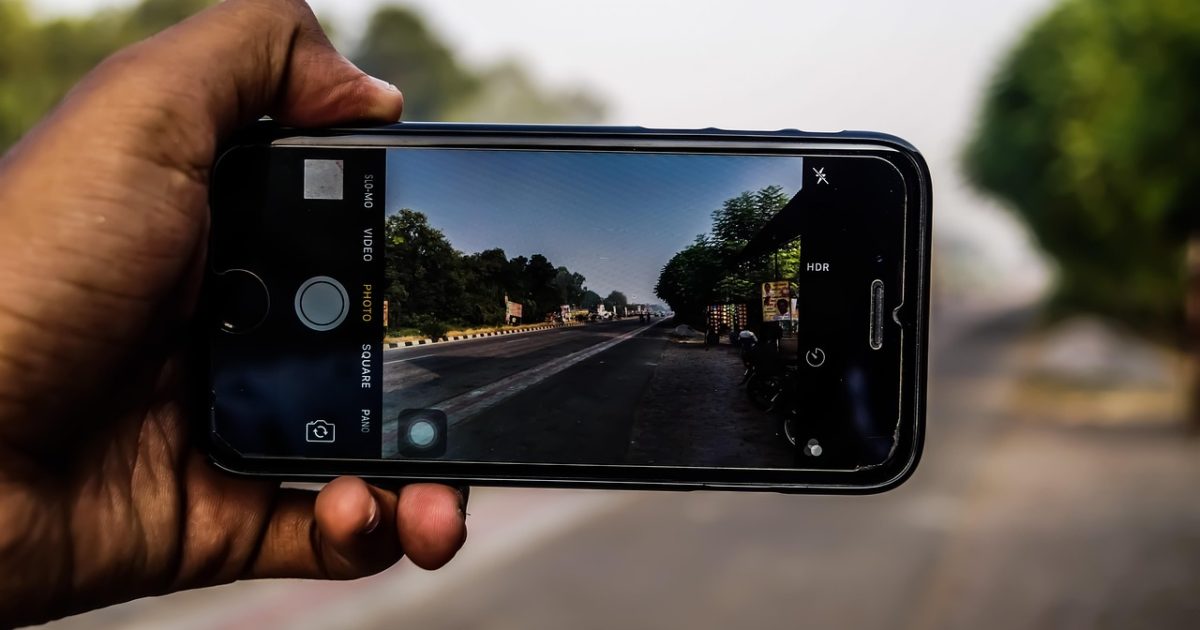
How HEIF ended up everywhere
MPEG shipped the format in 2015. Formats from that period were built around very different constraints — dial-up bandwidth, smaller screens, simpler pipelines — and HEIF carries that DNA.
Decades later, the ecosystem around it is the real asset — almost every editor, library and operating system has battle-tested HEIF support.
How to open HEIF files
Compatibility questions almost always resolve to the viewer, not the file — here is the map per system.
Windows: the built-in Photos app handles common cases; GIMP and IrfanView are the free heavyweights, Photoshop the paid standard. If a HEIF file refuses to open, the viewer — not the file — is usually the limitation.
macOS: Preview opens it natively, Quick Look previews it from Finder, and Affinity Photo or Pixelmator cover serious editing without an Adobe subscription.
Linux and everything else: GIMP and ImageMagick do the whole job from desktop or command line. And in a pinch, a browser converter doubles as a universal viewer: upload, convert to PNG or JPEG, open anywhere.
Common Questions
Is HEIF free to use?
Yes. HEIF can be created, opened and shared without licensing fees. The format dates back to 2015 and any patents relevant at launch have long stopped being an obstacle for everyday use.
How do I convert a HEIF file?
Upload it to the converter, pick the target format and download the result. The whole round trip takes well under a minute, and batches come back as a single ZIP.
Why is my HEIF file so large?
Because of how the format stores data: comparable to HEIC — roughly half of JPEG at the same quality. If size is the problem, converting to a format with stronger compression is the direct fix — test one file and compare the readout.
How do I create a HEIF file in the first place?
Two routes: export directly from an editor that supports it (Photoshop, GIMP and Affinity all do for mainstream formats), or take any existing image and run it through a converter with HEIF as the target. The second route is faster when the source already exists.
Can a HEIF file contain a virus?
An image is data, not a program — it does not execute. The realistic risk is a disguised executable wearing a fake image extension, so judge files by their source, keep the OS updated, and let the format worry about pixels.
What is the best way to email a HEIF file?
Check the size first: comparable to HEIC — roughly half of JPEG at the same quality. If the attachment pushes past a provider's limit (usually 20-25 MB), convert to a lighter format or share a link instead — recipients on slow connections will thank you either way.
The fastest way to internalize all of this: take one of your own HEIF files, convert it to two other formats, and look at the three file sizes side by side.
Written by Giovanni Picaro, a web developer who has been building image tools and optimizing sites since 2019. Sources: MDN image format reference and Google web.dev. Last reviewed: 2026.